• Zur Hauptnavigation springen
  • Skip to main content
  • Zur Fußzeile springen

feel food club

  • Home
  • About me
  • My Recipes
  • Blog
  • Navigation Menu: Social Icons

    • Instagram

Diet-Specific

The Best Healthy Falafel-style Pita with Dreamy Pink Goddess Sauce

August 31, 2020 by katharina.kuehr 1 Kommentar

That bite into a warm and soft pita filled with a giant dollop of hummus, that coleslaw, the crispy deep fried falafel and that yummy yoghurt-mayonnaise sauce on top. Sounds heavenly doesn’t it? As good as it sounds, it is really everything else than healthy. But we do not want to miss out on that deliciousness. So why not making it healthy?
What is special about this dish?

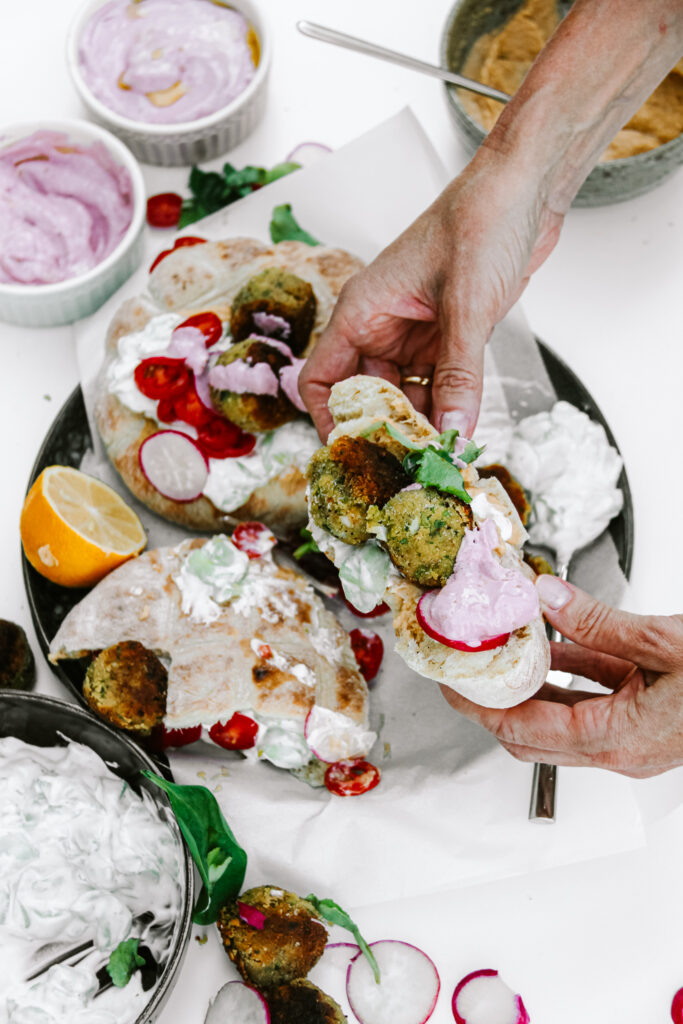
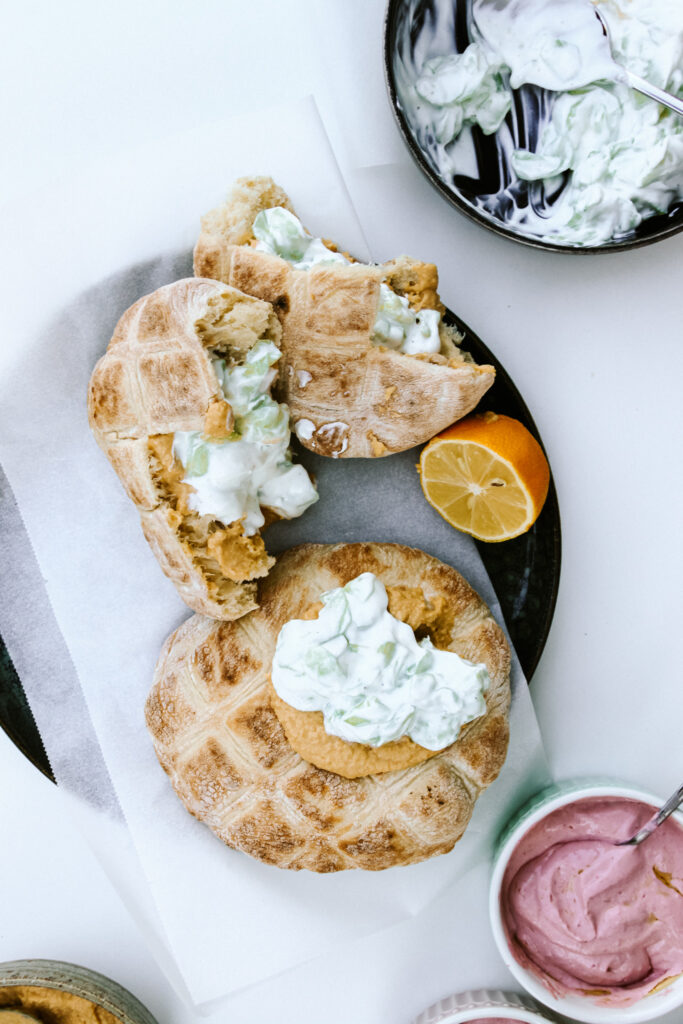
A lot to be fair. We have falafel, that are not deep fried, as traditional falafel would be but pan fried. Then we have a pink tahini and greek yoghurt sauce (which I have never seen at any of those falafel stands before) instead of the mayonnaise yoghurt dressing and we have a homemade tzatziki and self-made hummus for that extra flavour .
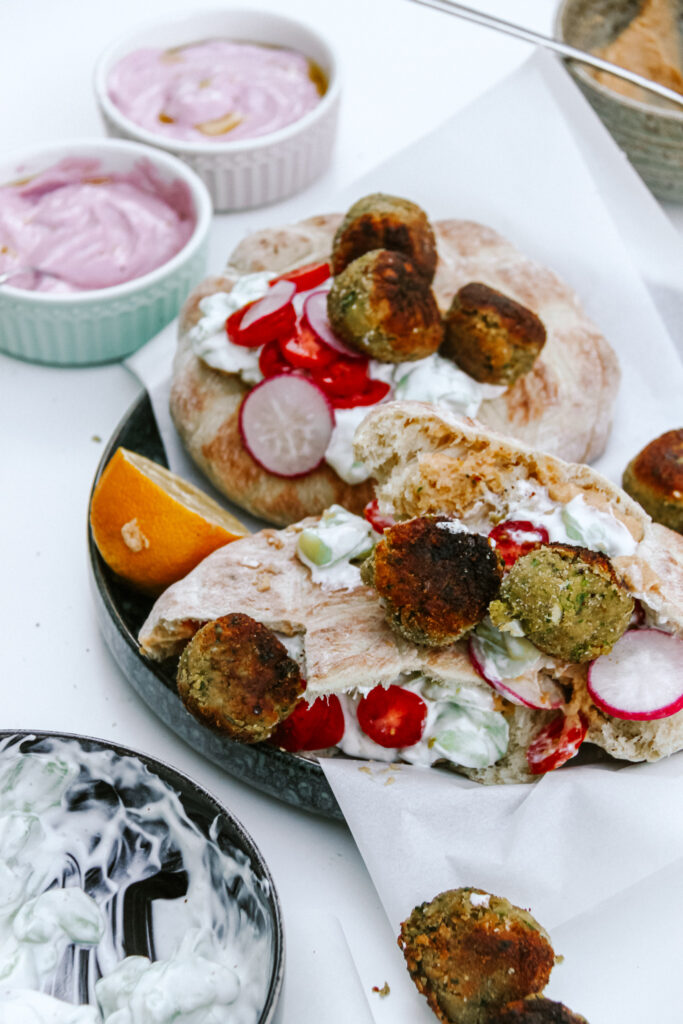
First, what is falafel and where does it come from?

Falafel is a ball made out of chickpeas or cassava beens combined with different spices and herbs before it is deep fried. Usually it is served in a pita bread or to go with hummus or other mezze appetisers. It is believed to have originated in Egypt and can be found in the Middle Eastern cuisine today.
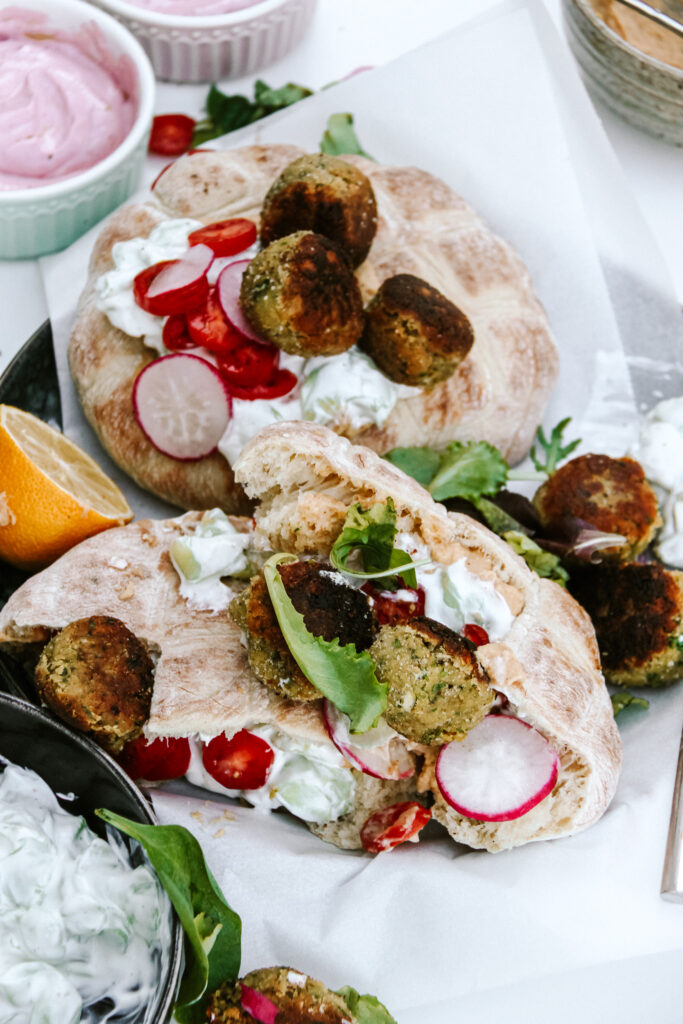
Why are falafel not very healthy?

While many people would believe that falafel are healthy because they are made out of chickpeas and are vegan, that is not quite the case. That is true, that the base of the falafel is healthy, so the „dough“ is healthy. But what is not nutritious about them then? The fact that they are deep fried. All of the oil adds a lot of fat and calories. It is more than fine to have fried food once in a while but it is not something that is healthy, one needs to be aware of that.

Authentic falafel are made with raw chickpeas that have been soaked. This way they are soft enough to blend but not too soft so you do not have a mushy consistency. But since we do not all have the time to soak falafel (especially when we want a quick meal), in here we use flour for the right consistency and canned falafel. This way they will not be white as crispy, but they are way quicker and still delicious!
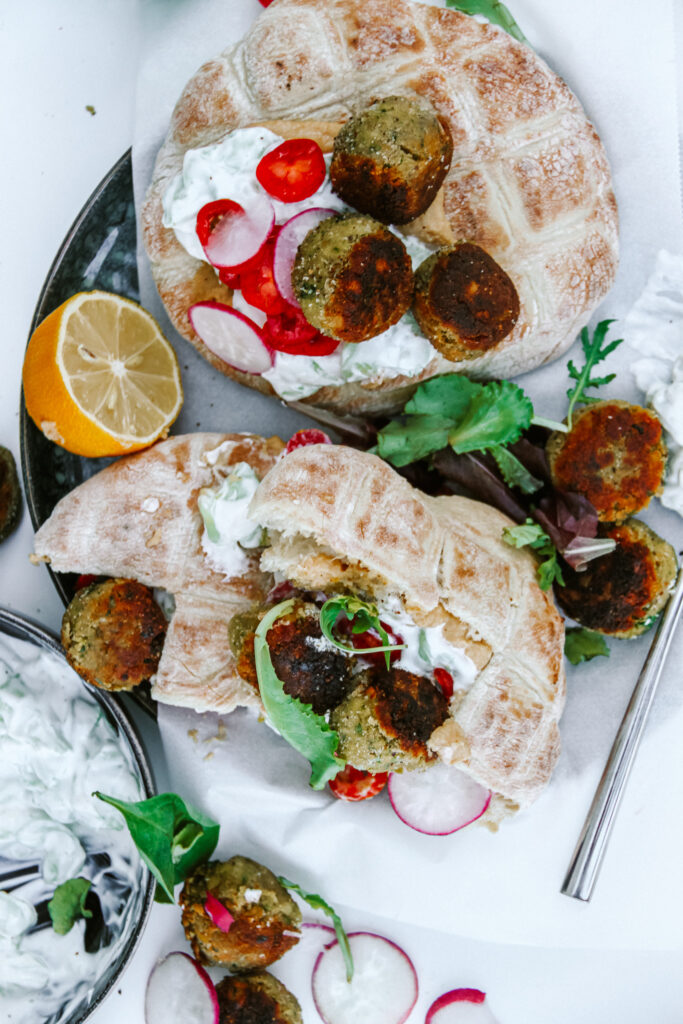
How to make this dish healthy

Instead of deep frying the falafel, we prepare them in a pan with just a little oil. Yes, you can also bake them in the oven but to be honest, I never find that those get really crispy when being prepared in the oven. When making them in the pan, we still get that crisp (not the exact same of course, but a really good one) while keeping things healthy.
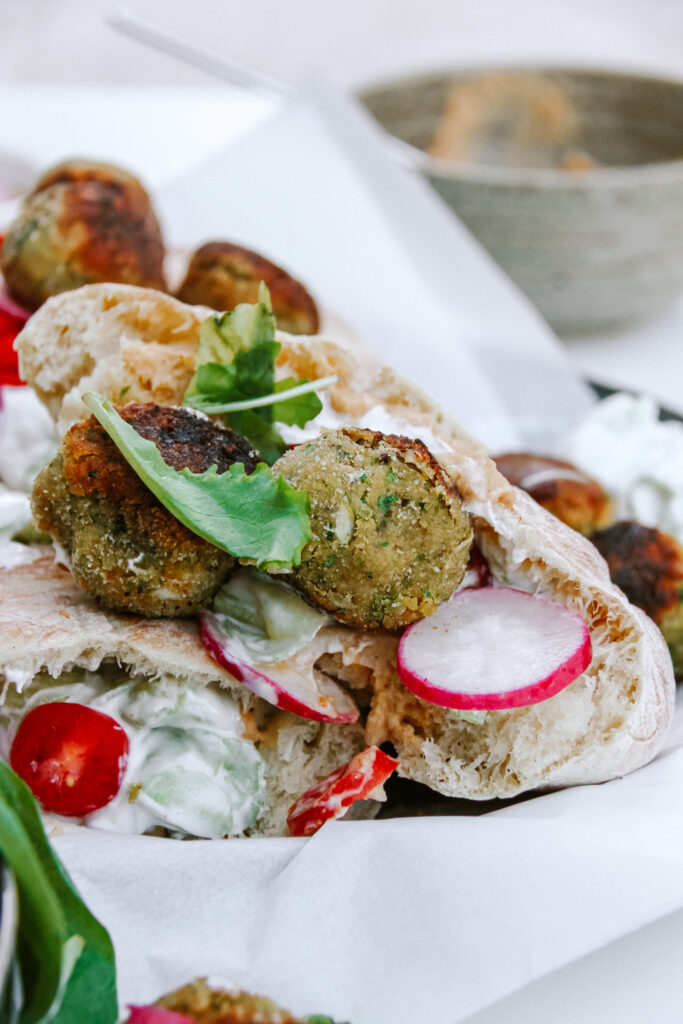
Also, to replace the mayo dressing that often comes on top we make a beetroot-greek yoghurt – tahini dressing. While homemade mayonnaise, in moderation is not unhealthy, store bought ones often have a lot of additives and preservatives in them and making your own one is a little tricky. The sauce we are making is high in protein, from the greek yoghurt, tastes delicious with the beets (and also has a nice colour), and has a good amount of healthy (or unsaturated fats) from the Tahin.

To make this entire dish even healthier you can substitute the normal pita with whole grain pita. This just is pretty difficult to find, which is the reason I stick with normal pita.
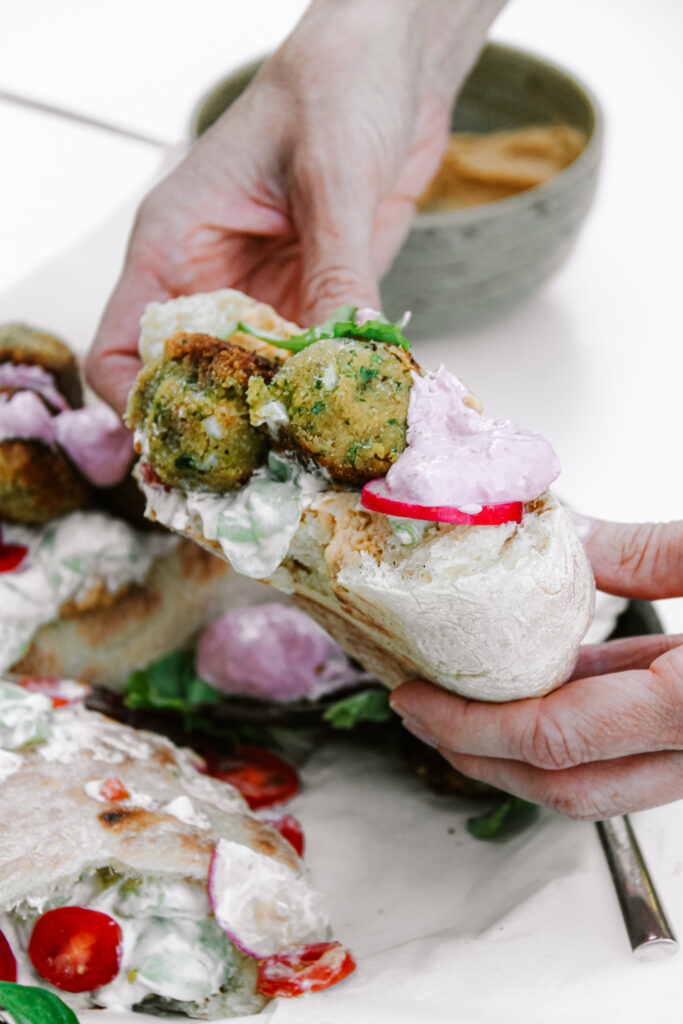
How do you make healthy falafel

This is super easy, to be honest. You need to drain canned chickpeas and add them to a food processor along with a bunch of parsley, onion, garlic, spices, and (wholewheat) flour. Then you just pulse everything together until you have reached a sticky, doughy consistency. (if you do not have a food processor or blender you can also add everything to a bowl, very finely chopped and mix it with a fork or your hands). Then you form little balls with your hand, one at a time and roll them in breadcrumbs.
In a hot pan with oil, you add the falafel and let them fry until crisp for about 3 minutes on each side. That is it!
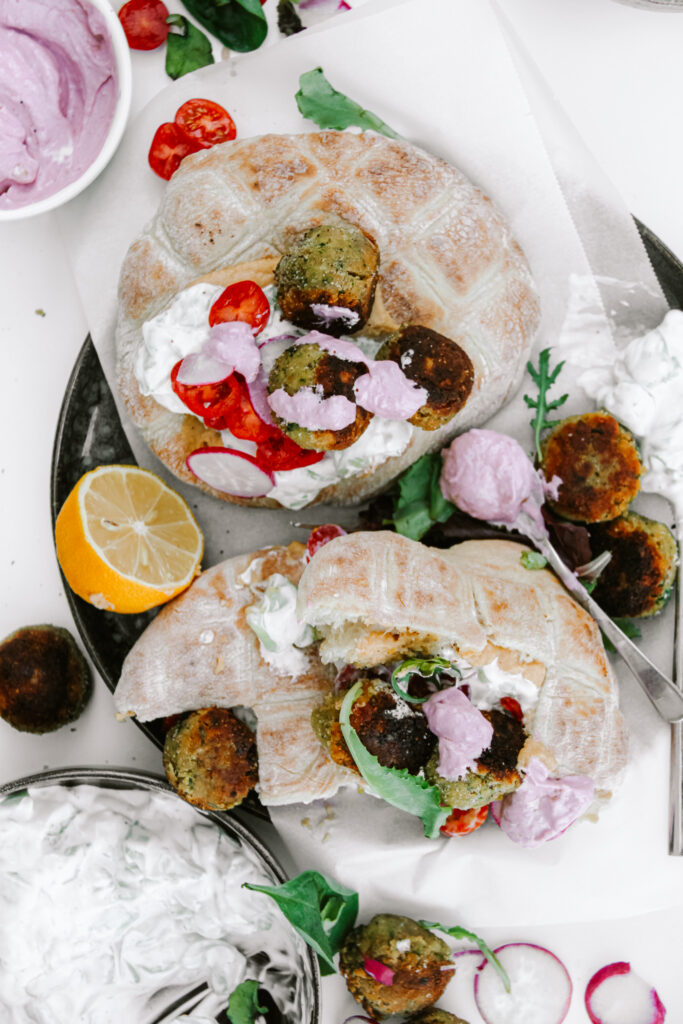
Meal prep friendly?

I would say so. Pack everything separately and mix together before eating. The falafel will not be quite as crisp anymore but they’ll be just fine when you heat them up in the oven.

I hope that you will enjoy this recipe and please your family and friends with it!

5 von 1 Bewertung
Print

The best falafel-style pita with dreamy pink goddess sauce

A healthy version of the dreamy Middle Eastern classic. A little crispy on the outside, super soft soft on the inside falafel with a creamy delicious Tahini-Beetroot Sauce, Tzatziki and Hummus. Not difficult, but really healthy.

Course Appetizer, dinner, lunch, Main Course
Cuisine middle eastern
Prep Time 25 Minuten
Cook Time 10 Minuten
Total Time 35 Minuten
Servings 4 servings
Calories 397 kcal

What you will need

For the falafel:

  • 1 can chickpeas
  • 2-3 tbsp flour (whole grain is prefered)
  • 1/2 red onion
  • 1 bunch parsley
  • 3 cloves garlic
  • 1 tsp salt
  • 1/2 tsp cayenne pepper
  • 1/2 tsp cracked black pepper
  • 1/2 tsp cumin
  • breadcrumbs
  • 2 tbsp olive oil

For the beet sauce

  • 1 small beetroot (precooked)
  • 100 g greek yoghurt
  • 1 tbsp Tahin
  • 1/2 lemon juiced
  • 1 clove garlic
  • 2 tsp honey

For the rest:

  • 1 cucumber
  • 200 g greek yoghurt
  • 1 clove garlic
  • 2 pita breads
  • some hummus
  • fresh radishes & tomatoes
  • 2 handful salad

How to

  1. For the falafel combine all the ingredients, except the breadcrumbs, flour and olive oil in a food processor and pulse until combined (do not blend until smooth!!!). Then add the flour a tablespoon at a time and pulse it in (not blending fully, again!) until the dough is not sticky anymore. Chill in the frisge for half an hour.

  2. In the meanwhile peel the cucumber. Then cut into very thin slices (preferably with a mandoline). Add it into a bowl and salt generously. Let sit for 20 minutes.

  3. In the meantime slice up the raidshes and tomatoes and wash the salad.

  4. For the beetroot sauce add all of the ingredients to a food processor and blend until smooth. If the sauce is too thick add some water or olive oil!

  5. After chilling take about 1 tablespoon at a time of the falafel dough and roll out in your hands into a small ball. Toss in the breadcrumbs until they cover the ball fully. Repeat with the rest of the dough. Heat up the oil in a pan and add the falafel. Let fry on this side for about 2-3 minutes on medium high heat before tossing. Do not toss around in the pan immediately since the dough still is a little bit soft. After those 2-3 minutes, start tossing them around in a pan softly and fry for another 5-6 minutes until they are golden brown on each side and crispy.

  6. Prepare the Tzatziki. Take a clean kitchen towl and place the salted and sliced cucumber in it. Squeeze out all of the remaining water of the cucumber and put it back into the bowl. Press the garlic and add it along with the greek yoghurt. Combine everything well and season with more salt if desired.

  7. To serve fill the pita with hummus, the veggies and the tzatziki. Add the falafel on top and drizzle with the sauce. Serve and enjoy !

Happy cooking,
Enjoy,
Katie // Une Petite Cusinière
Kategorie: Appetizers, Cuisine, Diet-Specific, Lunch/ Dinner, Middle Eastern, Oriental, Vegetarian, Vegetarian Stichworte: beetroot, beetroot sauce, best falafel, chickpea, chickpea recipes, crispy falafel, cucumber, falafel, falafel pita sandwich, family friendly, healthy, healthy chickpea recipes, healthy falafel, healthy family friendly, healthy pita, pita, pita sandwich, tahini, tahini sauce, tzatziki, vegan meals, vegetarian, vegetarian dinner

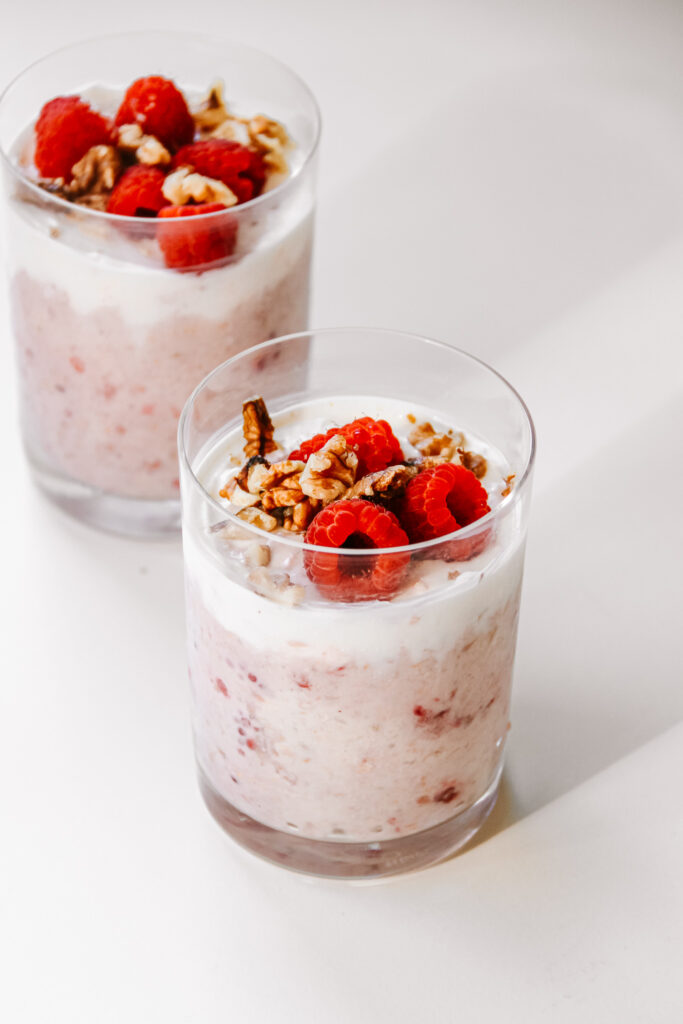
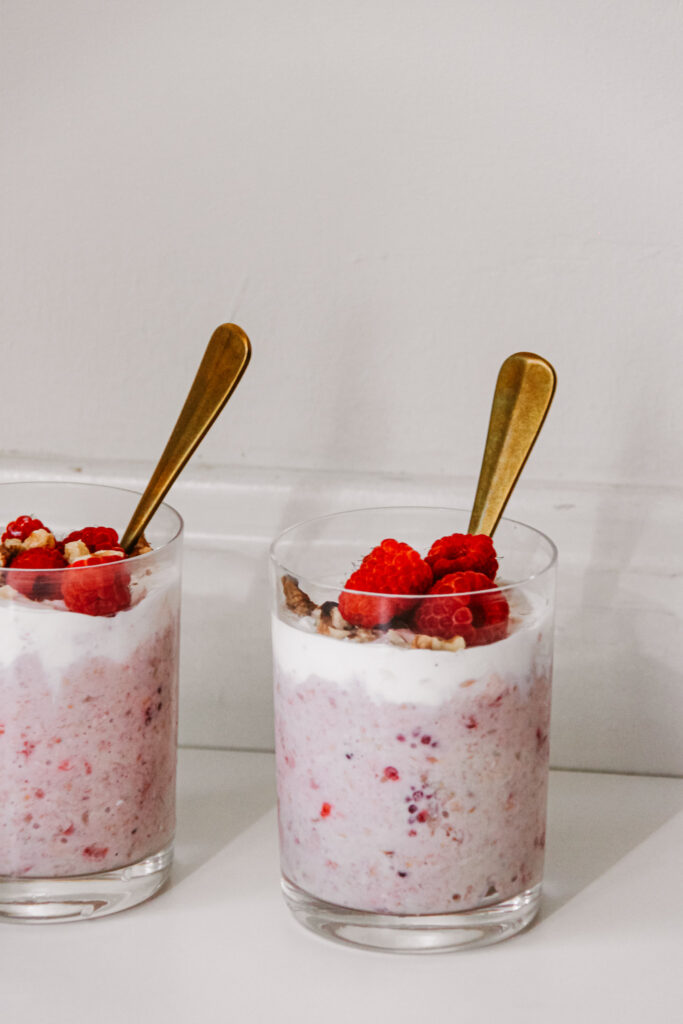
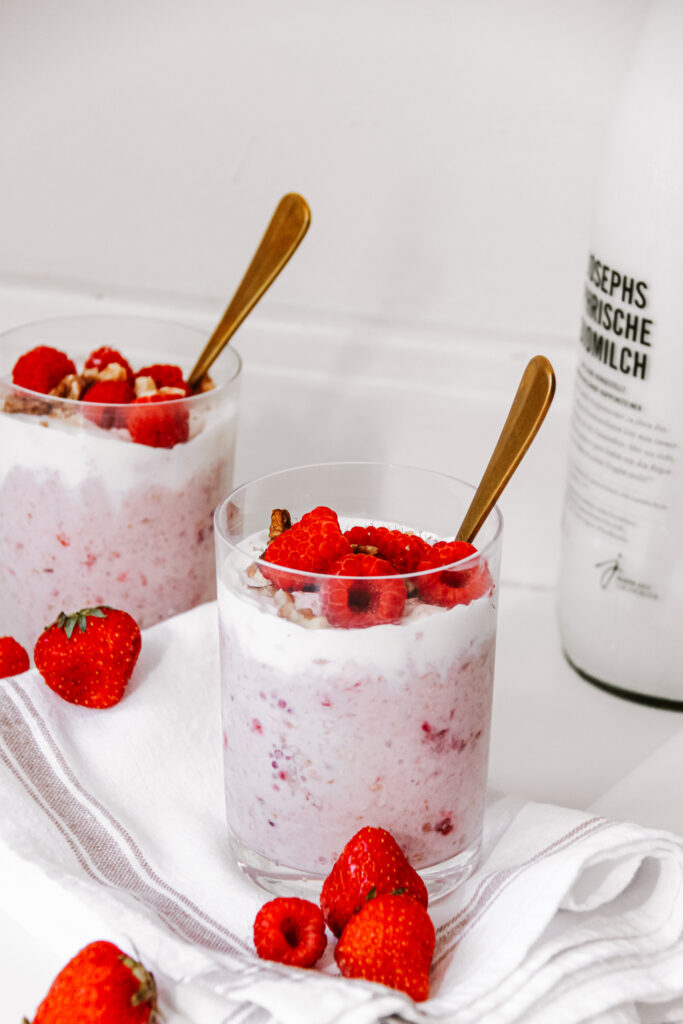
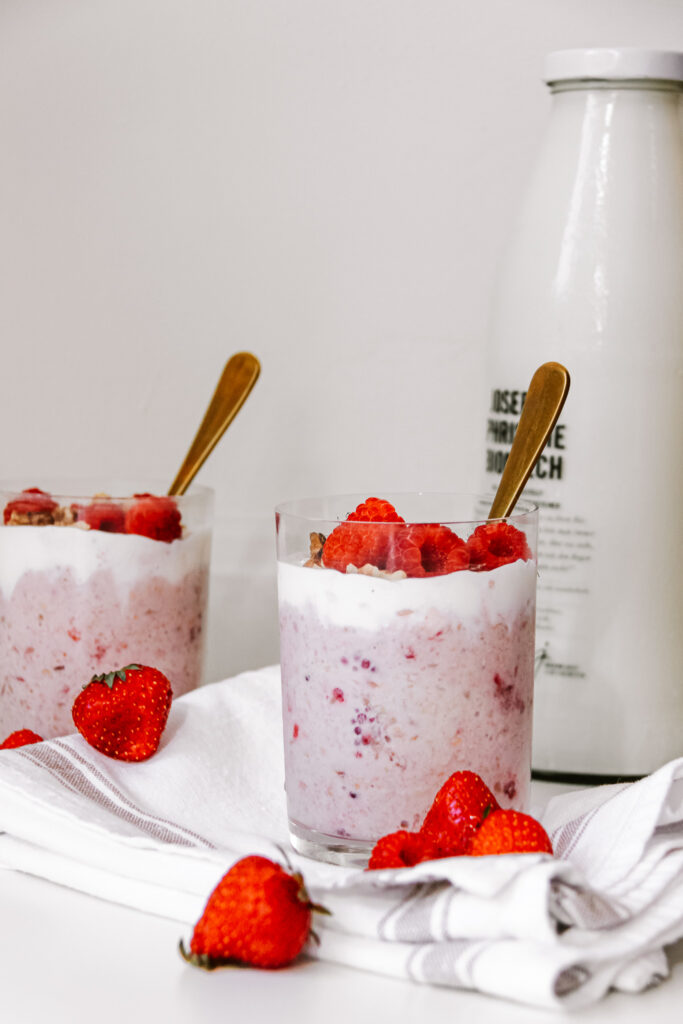
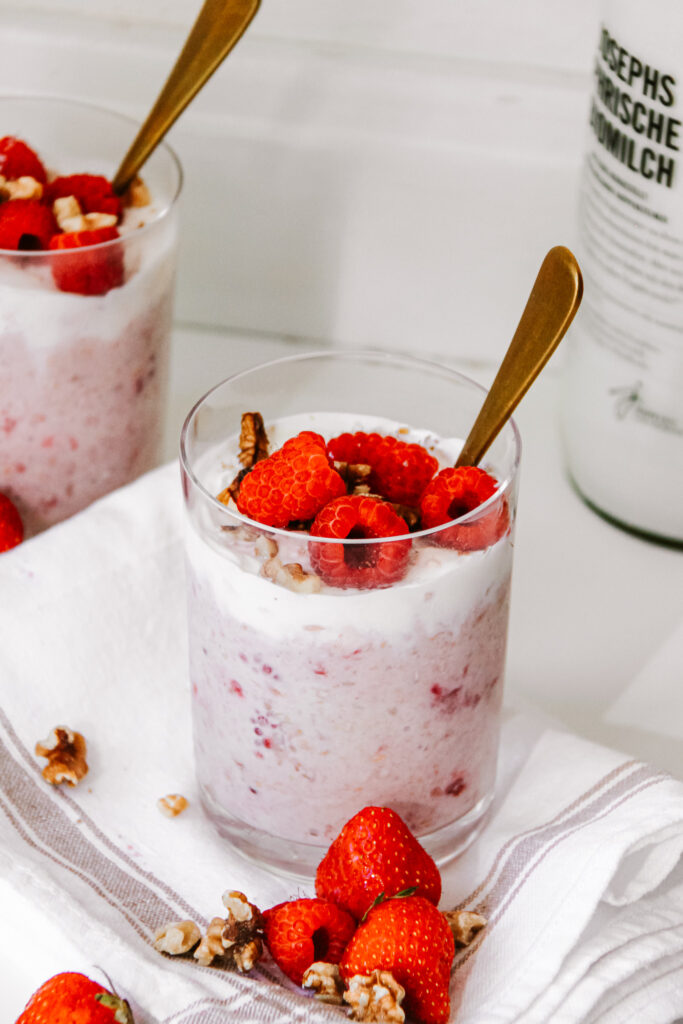
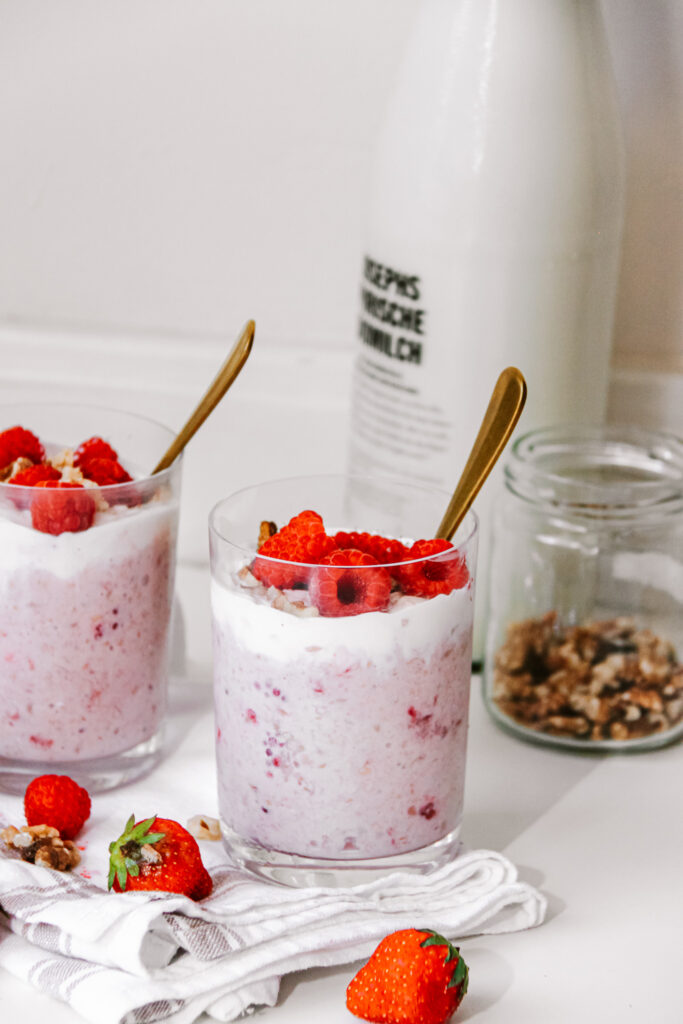
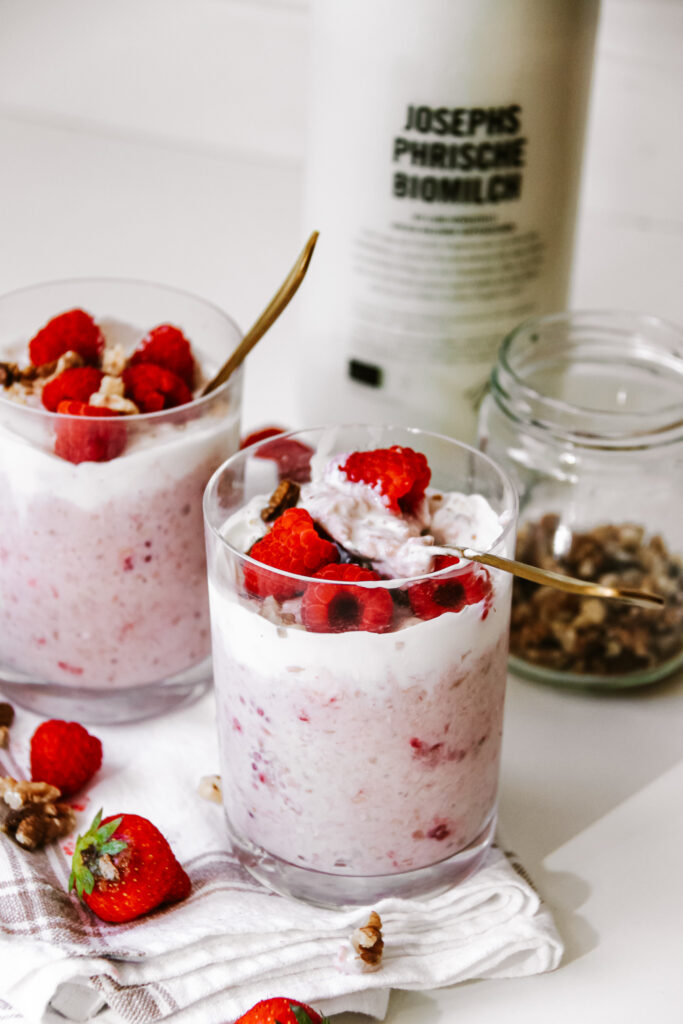
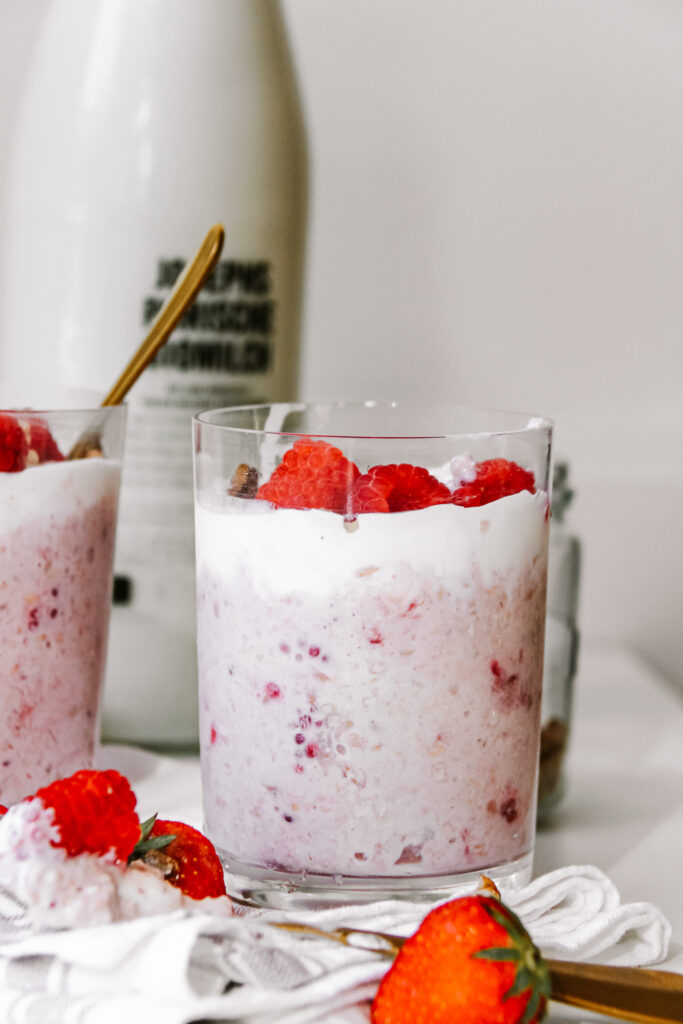
Ultimate healthy and creamy raspberry overnight oats from dahoam

August 24, 2020 by katharina.kuehr Kommentar verfassen

Summer is a tough time for all porridge lovers. As good as porridge is, who wants to have a steaming hot bowl of oat in the morning when you already start to sweat when you just take a look outside. That’s why we need a cold alternative. Cold oats? Yes, that’s a thing. Overnight Oats. And no, they are not boring or taste like a babyfood.

What are overnight Oats?

As the name already suggests, overnight oats is a form of oatmeal that is prepared overnight. Well not exactly. Usually they are prepared the evening before by mixing together oats and milk and then they chill in the fridge for a few hours, mostly overnight. This way the oats can really absorb and soak up the milk to get soft for the next morning

What is special about this dish?

Well, first, and most important, this breakfast, snack, dessert, whenever you want to enjoy it, is SO EASY to be made from LOCAL ingredients only. Why? Especially here in Austria we have a lot of farmers for local dairy products (but you can find this in most countries). Also, in pretty much any supermarket or bulk store you can find rolled oats that are grown in Austria, because we have an ideal climate here. And lastly, at the moment it is the season of berries, which means nothing is easier than finding berries from Austria right now.

Why is it better to buy local?

There is no single answer to this but I divided it into 4 main reasons:

  1. You support your local economy. Especially during or after a crisis like the one we are going through right now it is important to really support the country you live in. The farmers who produce Austrian products have also been hit by the crisis and as a nation it is important to help together. With supporting the economy you also save and maybe create new jobs, which is very important at the moment, since a lot have gone to loss.
  2. It’s environmental impact: when you buy locally, the goods do not have to be transported for a long time by ships, planes, cars or trains. Especially in a country like Austria, transport way are not very distant and this way we save a lot of CO2 and therefore have a positive impact on the environment.
  3. To be independent: This may sound weird at first but the importance is shown in crisis like the one at the moment. of course raspberries from countries like Spain or Portugal may be cheaper. But when we all keep buying those because they are cheaper, the amount of Austrian raspberries planted will be reduced. And then, when facing a crisis as the current, where delivery and the entire transport system suddenly stops or is interrupted we will not have enough berries to satisfy our needs. So when we consume the products we produce in the country we live in, we, as a nation, are more independent.
  4. Quality: when you buy local products (at least in Austria), you can expect the quality of the product to be at a high standard and you know this. When buying from other countries, where you may not not the quality standards, you may be disappointed and the product may contain some unnatural additives.

Where I get my local products from:

The main ingredient, so the Oats I buy at a bulk store. The one I go to is called Lieber Ohne and it only has organic and unpackaged food, mostly from the region but you can see from any product where it comes from.

The Dairy products I get at Joseph Brot. They are an organic bakery and always have dairy products from Austrian farmers in reusable jars and bottles. A great way to buy local and without producing waste.

The berries I get at a local market. I know where they come from and I can choose the ones I want myself!

The same goes for the honey and nuts. I either get both at Lieber Ohne or I get them at a farmers market!

How to make really good overnight oats:

As I said, overnight oats usually are prepared by solely combining oats with milk. Since this tastes a little boring as you can imagine we are taking a regular version and making it fancier, while still keeping it simple. By adding fruits we add an extra kick and we also use some more ingredients to make it extra creamy and delicious!

This already starts with the oats. Maybe you already know, maybe you do not – there are different kinds of oats. Larger (whole) ones and finer ones. While large ones work great for things like granola, finer ones are best for porridge and overnight oats. This may sound a little stupid because they are the same product in the end of the day but this really makes a difference! Finer ones just absorb the liquid better and therefore make it creamier.

Also, when wanting really creamy overnight oats it is best to add some yoghurt. In here I like to use greek yoghurt because it also is very easy to get in reusable glass jars but any other yoghurt or plant based yoghurt works just fine. Again, this makes it super creamy.

Another two ingredients which I would always recommend to be adding in are chia seeds and a little syrup. The chia seeds will swell up and make everything stick together better. The syrup adds a little sweetness (even if it just is a tiny drizzle) and make it 10 times better!

My last tip on making overnight oats is to add some fruit when making them. You for sure can just add some fruit on top the next day but adding them the night before helps the oats to soak up some of their sweetness, taste and juices, so it’ll infuse the entire dish.

More oat inspiration…

If you do like oats, just as I do you can check out a few other recipes of mine, which you are going to like for sure, like the Mango Overnight Oats, Oatmeal with Caramelized Bananas, Bircher Muesli with Honey Poached Apple, Healthy Peach and Cherry Crumble, Mango Coconut Granola or my Apple and Cranberry Granola !

How to make this dish low waste

Making delicious dishes while not producing much waste is actually pretty easy. If you wanna learn how, then you can read this at my Andalusian Gazpacho Post, My Easy No-Waste ice Cream Sandwiches or my No-waste French Toast with Basil Apricots blog post!

So just to summarise:

  • buy your oats at a bulk store! You can go there with your own jars or Tupperware and buy lots and lots of grains without packaging! A very sustainable way.
  • Get your dairy products at your local bakery. Most times bakeries have a small section with dairy products, which most of the time are packaged in reusable jars or bottles
  • Go to a local market. Getting fresh fruit there often is better than at the supermarket. Primarily, you know where it comes from easily and it most of the times is not packaged in plastic. I am aware that you will not find berries without packaging but mostly they at least come in paper or cartoon.

To sum up

I hope that this little guide and explanation really helps you to understand why it is important to buy locally and also include more local products easily into your daily life. Plus, you have really incredibly delicious breakfast recipe for these late summer days!

Print

The Ultimate Healthy and Creamy Raspberry Overnight Oats

A delicious, creamy and refreshing summer breakfast for those hot summer days with regional ingredients

Course Breakfast, brunch, Snack
Prep Time 10 Minuten
Total Time 10 Minuten
Servings 2 servings
Calories 414 kcal

What you will need

  • 100 g rolled oats the finer the better
  • 100 g greek yoghurt
  • 200 ml milk (you can also use plant based milk)
  • 1 tbsp honey
  • 1 tbsp chia seeds
  • 200 g raspberries
  • a few walnuts and raspberries for garnish

How to

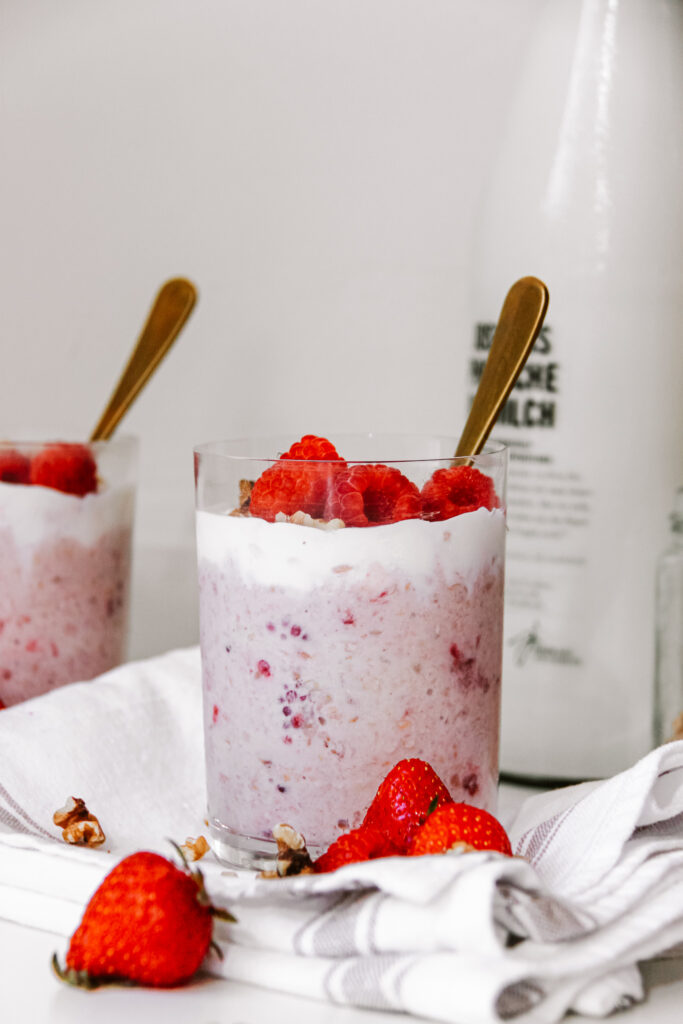
  1. In a large bowl mash the raspberries until mushy. Add the rolled oats, yoghurt, chia seeds, honey and milk and stir until everything is combined well.

  2. Keep in the fridge for at least 4 hours to overnight.

  3. Take out the next morning and top with extra greek yoghurt, raspberries and nuts. Enjoy!

I hope you enjoy,
Happy cooking,
Katie // Une Petite Cuisinière

Kategorie: Breakfast, Desserts, Diet-Specific, Sugar Free, Vegetarian, Vegetarian Stichworte: Austrian, berries, berry, berry recipe, breakfast, brunch, healthy, healthy breakfast, healthy brunch, healthy overnight oats, oatmeal. oat recipe, oats, overnight oats, raspberries, raspberry recipe, regional

Incredibly easy Strawberry and Pesto Couscous with Crumbled Feta

August 11, 2020 by katharina.kuehr Kommentar verfassen

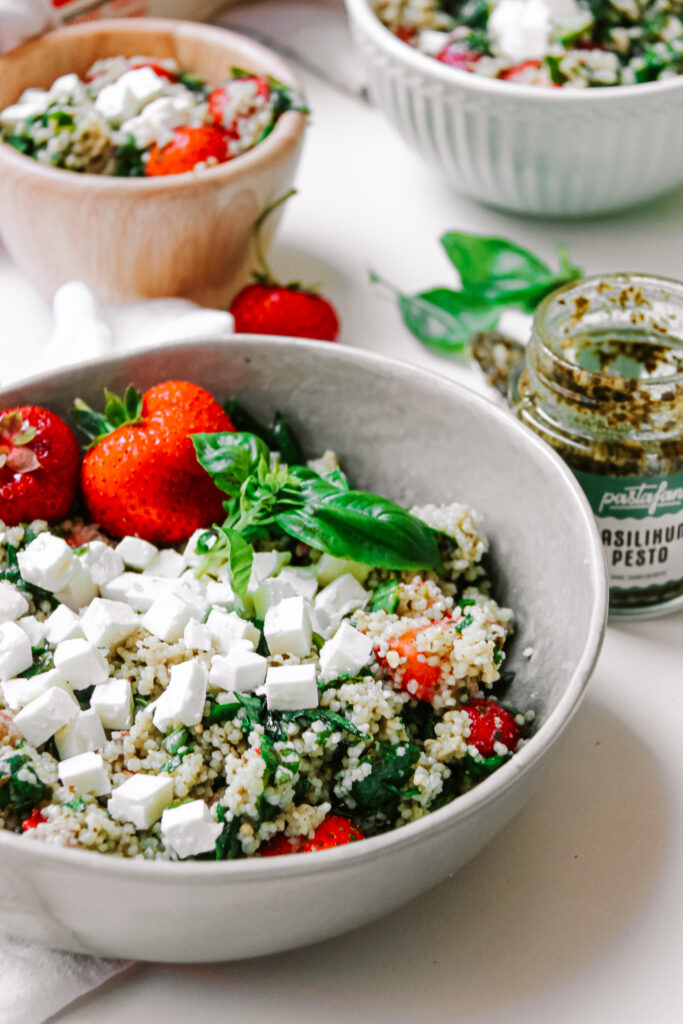
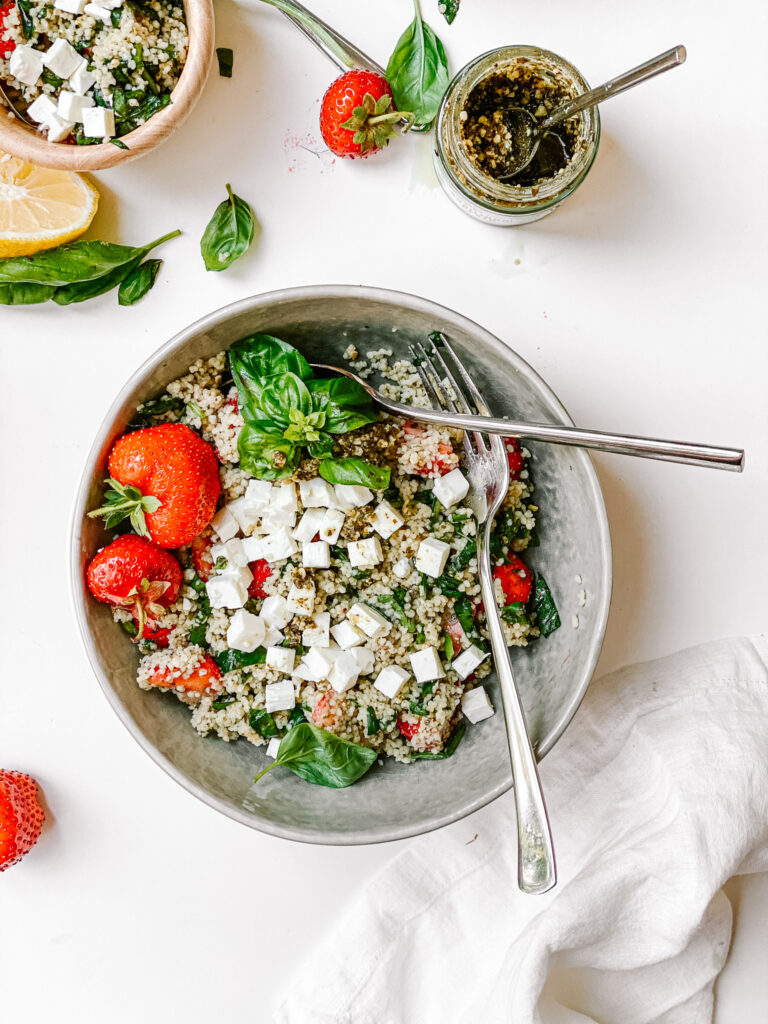
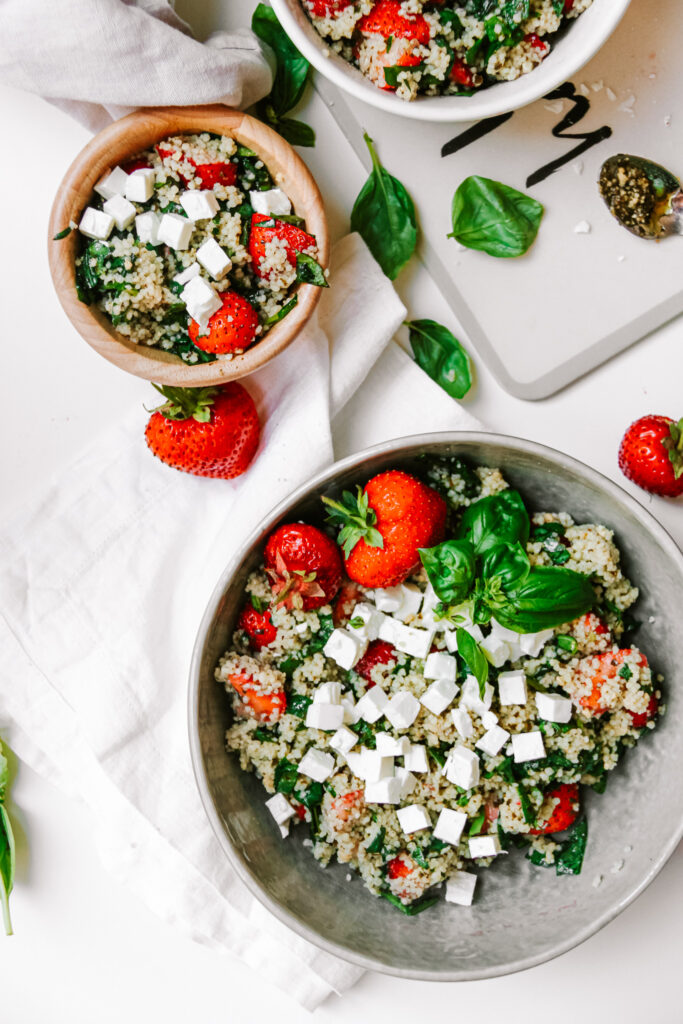
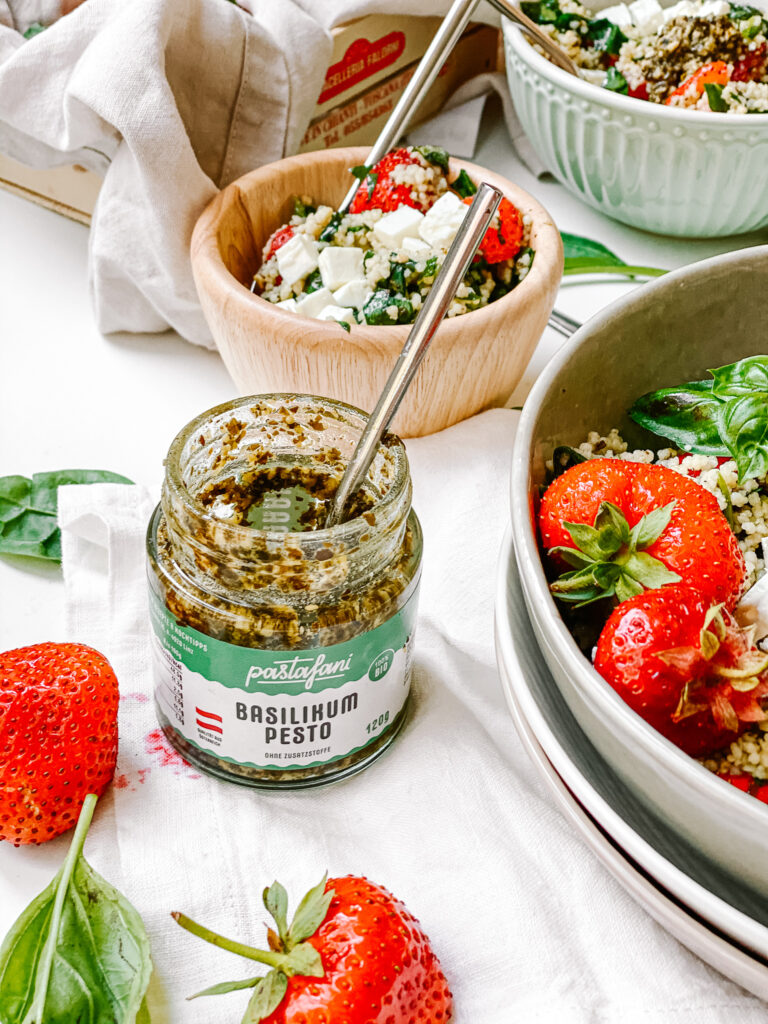
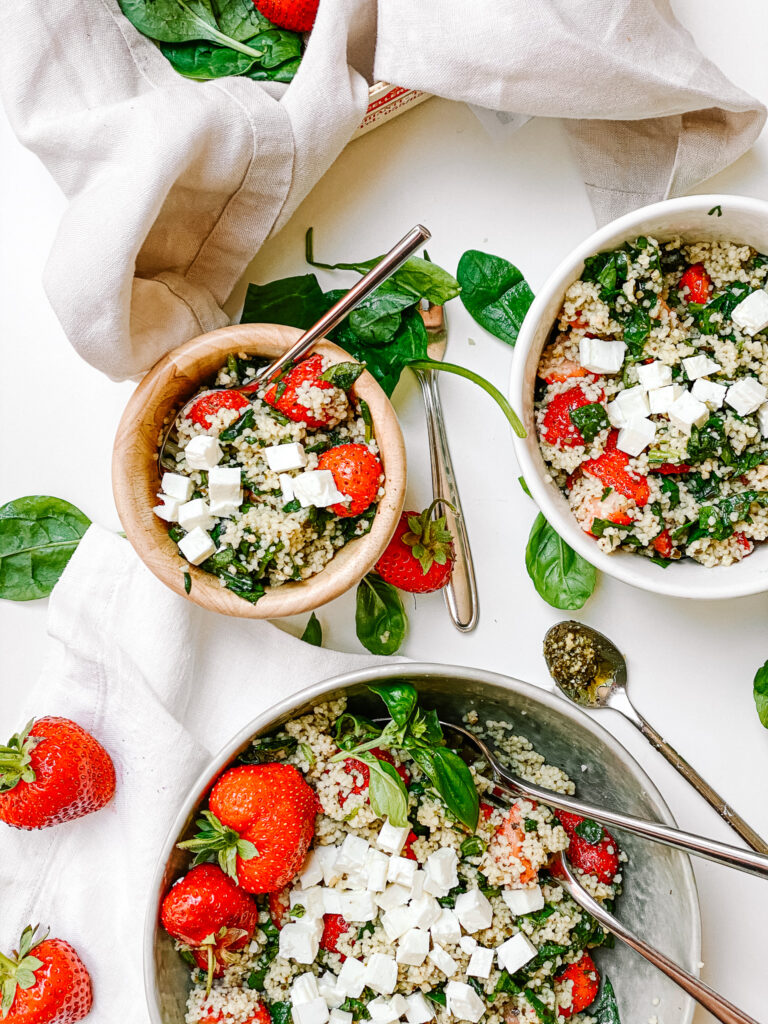
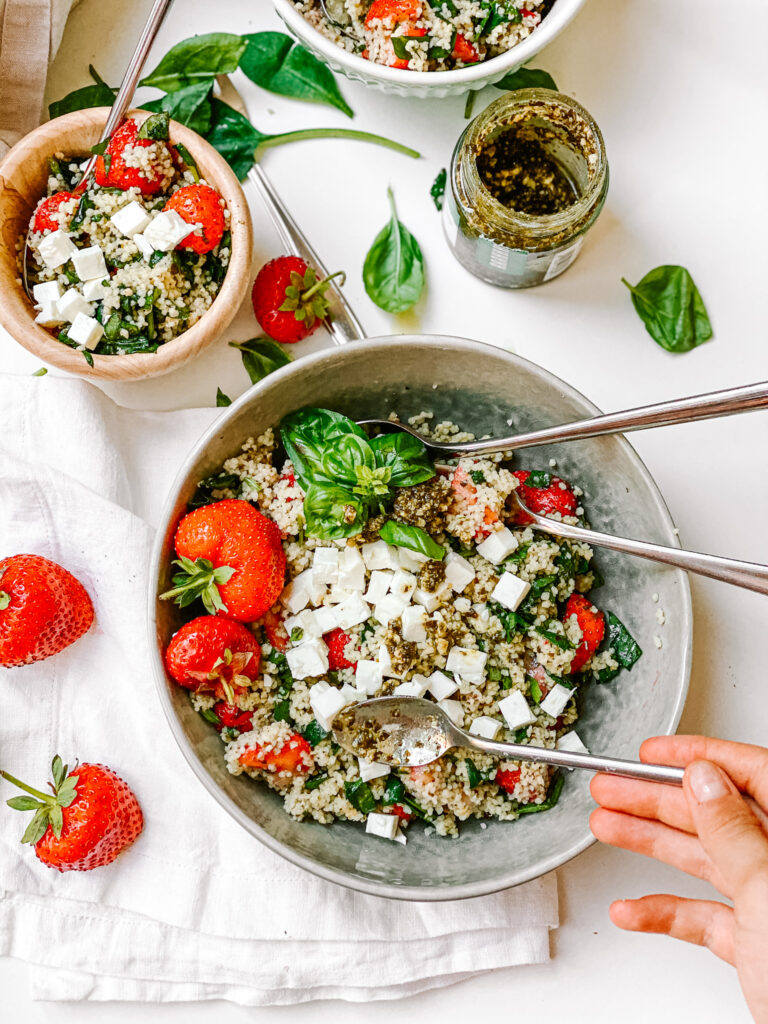
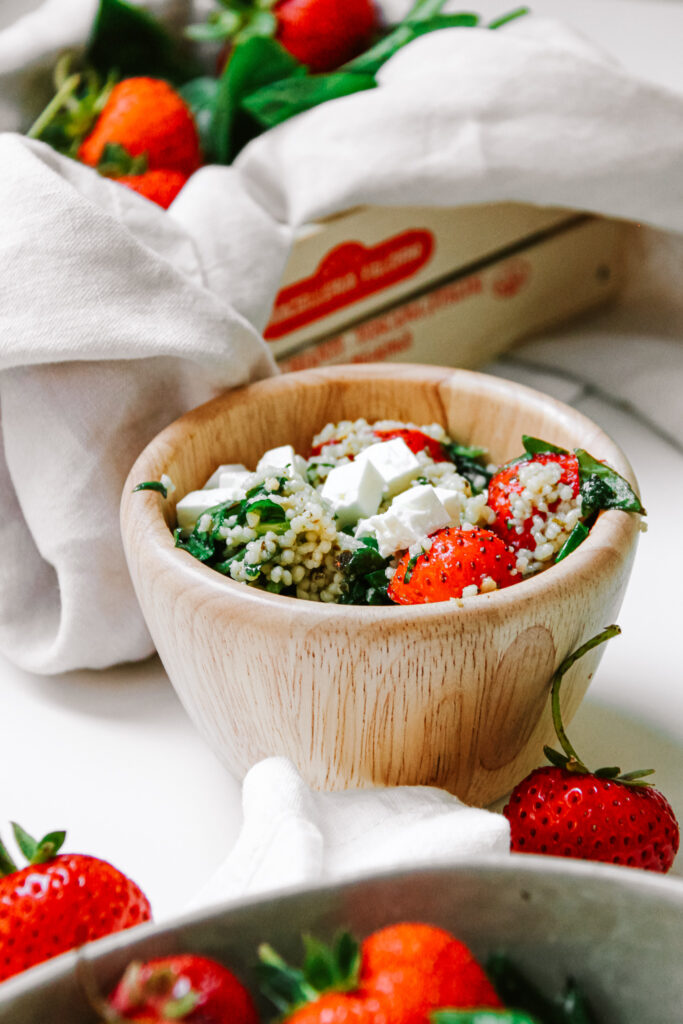
I can’t stress this enough but summer REALLY is all about those quick and easy meals. And about all of the fresh fruits. So we are taking those super juicy and sweet large summer strawberries and packing them into the easiest „salad“ with couscous, pesto, feta and lemon and making it into a (no joke!!!!) 10 minute (healthy!) dish. We do not need anything more!

What is special about this dish?

Well, I guess everything! I mean, we all know those „basic“ combos, watermelon and feta, strawberry and spinach, feta and pesto, and so on, But really, a watermelon and feta salad or a strawberry and spinach one is nice but it really is not filling. maybe for 10 minutes ok, but that’s not what we want.

What is special is that there are so many different products used and combined into one dish! So many different flavours and textures mixed up in a bowl. It is the sweetness of the strawberries (which you really have to try because they are in season right now!!), the softness of the couscous, the crunch of the spinach, the nice tanginess from the feta and the saltiness from the pesto.

The pesto – a dream

I have already explained in a blog post whether pesto is healthy or not (you can read about it in the post for the and for the Ultra Green Pesto Salad with Burrata ). To summarise, you can say yes(-ish) if in moderation. But really, pesto is not just pesto. When you go to the supermarket there are many many different pestos. So just a few words about it.

Pesto is traditionally from Italy and made out of basil, olive oil, pine nuts, salt, garlic and parmesan cheese. And really, these are the only ingredients that should be in pesto. But if you go to the supermarket you are very likely to find one that is not high in quality since most of them are. A little tip here: look out for dark ones and check the ingredient label. the darker they are the higher the quality because the more basil is in there, and the less water!

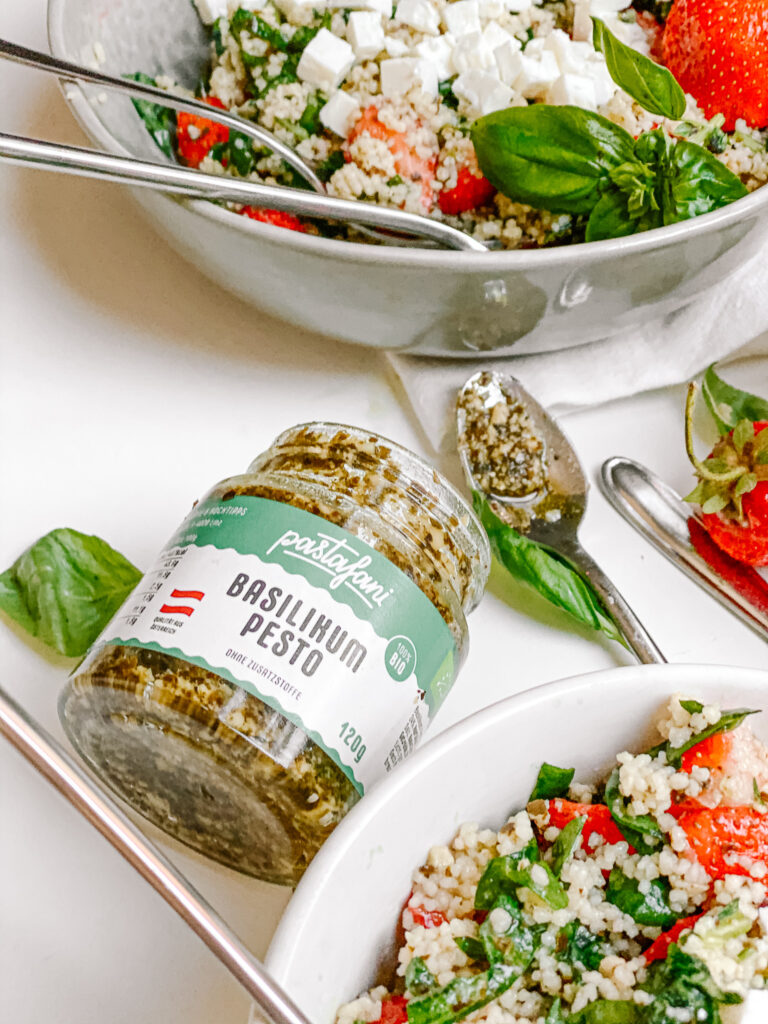
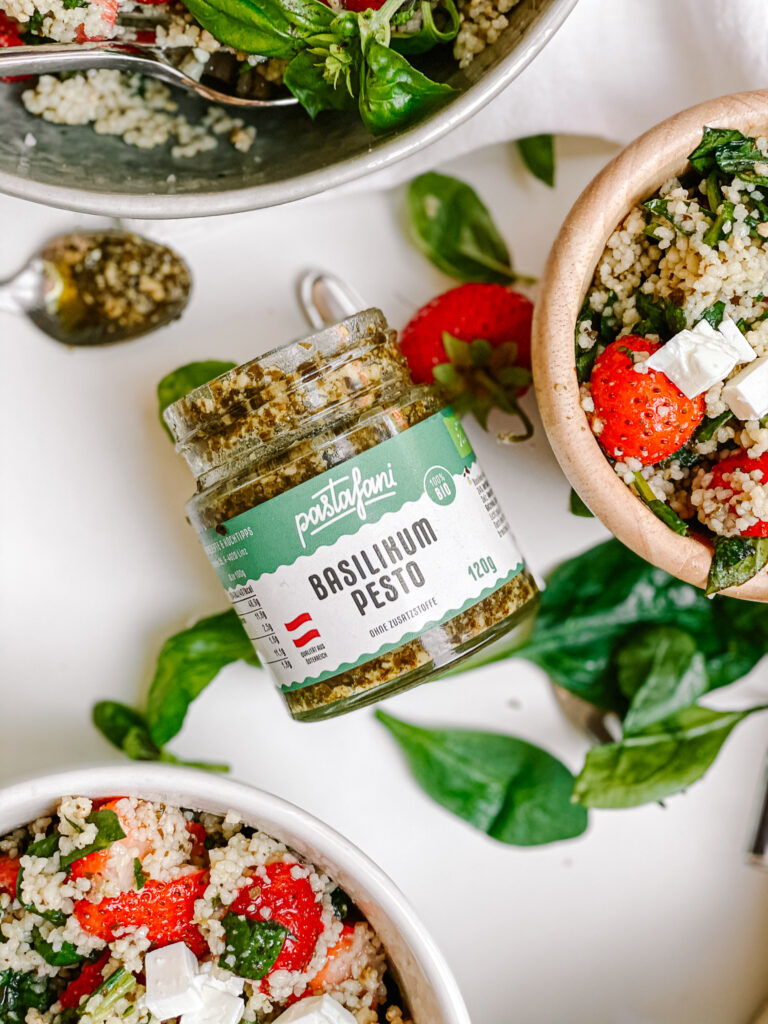
I know, I know, it is not so easy to find a good pesto at the supermarket. That is the reason I have decided to try and order one online and let me tell you, BEST DECISION EVER. It literally tastes just like in Italy or homemade one!!! The perfect saltiness, a REAL basil flavour and not just watery paste with flavour enhancer.

I got it at PastaFani and it really is a game changer. Made out of 100% Austrian Ingredients and 100% organic ingredients. I am being serious, that exists AND it is tasty! Really, the best pesto I have ever bought somewhere. And it is so convenient. It comes straight to your door (delivered) and you can (and definitely will want to) add it on pretty much anything! Trofie with Pine Nuts and Potatoes, like in Italy, in Salad dressings, scrambled eggs, sandwiches, anything.

You can find the pesto here. If you want good pesto, get this one. It is insane!

Is this dish healthy?

Alright, enough said about pesto (if there is such thing as saying enough about pesto) but is this dish actually healthy or is it just super tasty? believe it or not, it is healthy too! You get in your vitamins, from your strawberries and spinach, a good amount of plant based protein, carbohydrates and fibre and healthy fats from the pesto. It is a pretty well balanced, healthy and delicious dish!

Although, I need to say that couscous is not quite as healthy as Quinoa is since it contains way less fibre but you can look out for wholegrain couscous to make it even healthier!

Substitutes:

Couscous – Quinoa, Millet
Strawberries – Raspberries
Feta Cheese – leave it out, sub for Mozzarella or Cottage Cheese
Spinach – lambs lettuce, arugula, kale
Pesto – do not substitute this (since this really makes the dish)

I genuinely love this recipe on hot summer days since it comes together really quick! It also works amazing for meal prep so you can take it on a picnic or to a friends house for barbecue or take it to work/ school for a delicious and healthy lunch!

Print

Incredibly easy Strawberry and Pesto Couscous with Crumbled Feta

Summer in a bowl. Takes you 10 minutes to make, combines juicy strawberries with tangy pesto, fresh feta and soft couscous. Tastes like a treat but is healthy. You´ll want it all summer long!

Course Appetizer, bowl, Main Course, Salad, Side Dish
Prep Time 10 Minuten
Total Time 10 Minuten
Servings 4 people
Calories 450 kcal

What you will need

  • 240 g couscous
  • 400 g strawberries
  • 100 g spinach fresh one
  • 100 g feta cheese
  • 120-160 g basil pesto
  • some fresh basil leaves
  • salt & pepper
  • 1/2 lemon juiced

How to

  1. Prepare the couscous according to package instructions and generously salt it. (Usually you just have to pour boiling water on top but this varies from brand to brand).

  2. Remove the greens from the strawberries and quarter or half them. Roughly chop up the spinach and basil.

  3. For the dressing combine the pesto with the juice of the lemon and 1-2 tbsp of water.

  4. Once the couscous is done let it cool off a bit and then combine everything in a bowl. Divide onto plates and crumble the feta on top! Serve and enjoy!

I hope you really enjoy this recipe as much as I do!
Happy cooking,
Enjoy,
Katie // Une Petite Cuisinière

Kategorie: Diet-Specific, Lunch/ Dinner, Salad, Summer, Vegetarian, Vegetarian Stichworte: couscous recipes, easy, easy salads, healthy couscous recipe, healthy summer recipes, pesto, pesto couscous, pesto recipes, pesto salad, pesto strawberries, spinach, strawberry, strawberry season, summer couscous salad, summer recipe, summer salad, vegetarian, vegetarian lunch, vegetarian salad recipes

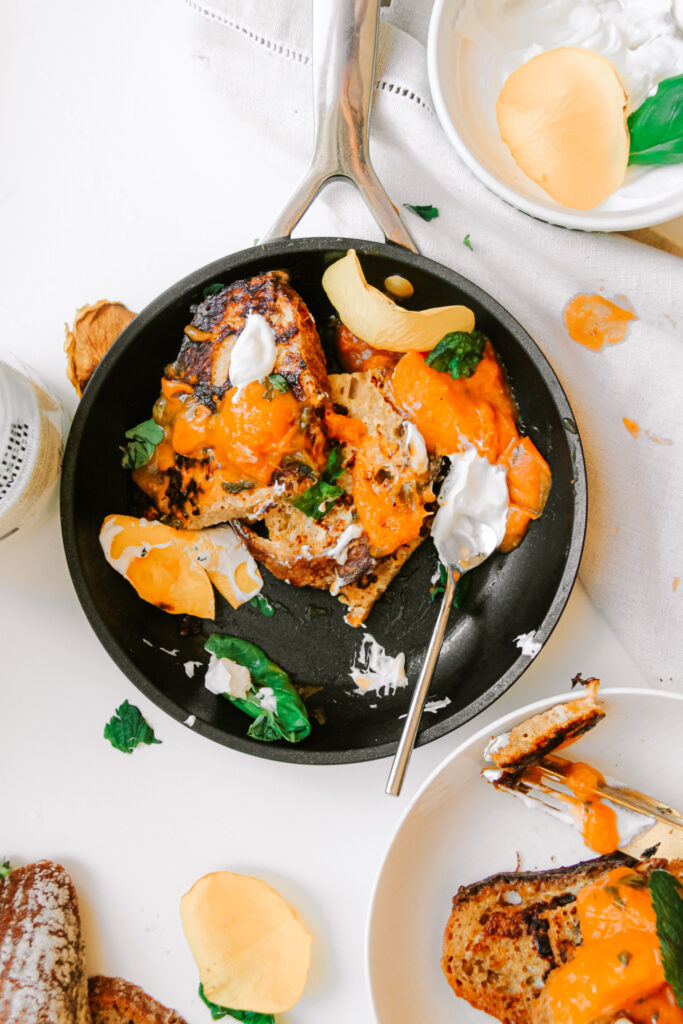
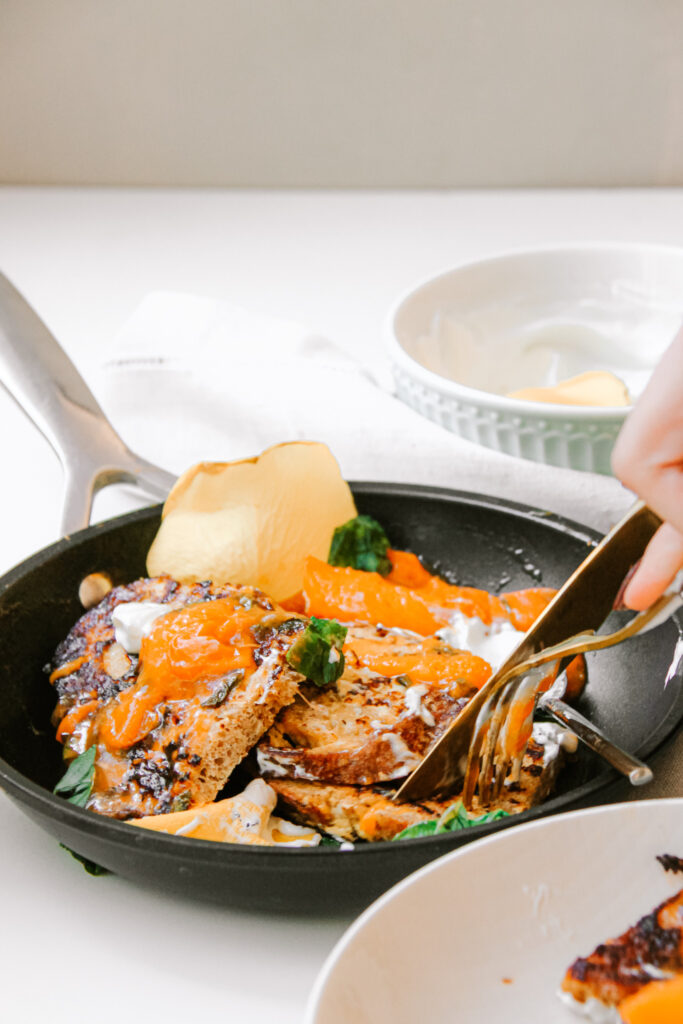
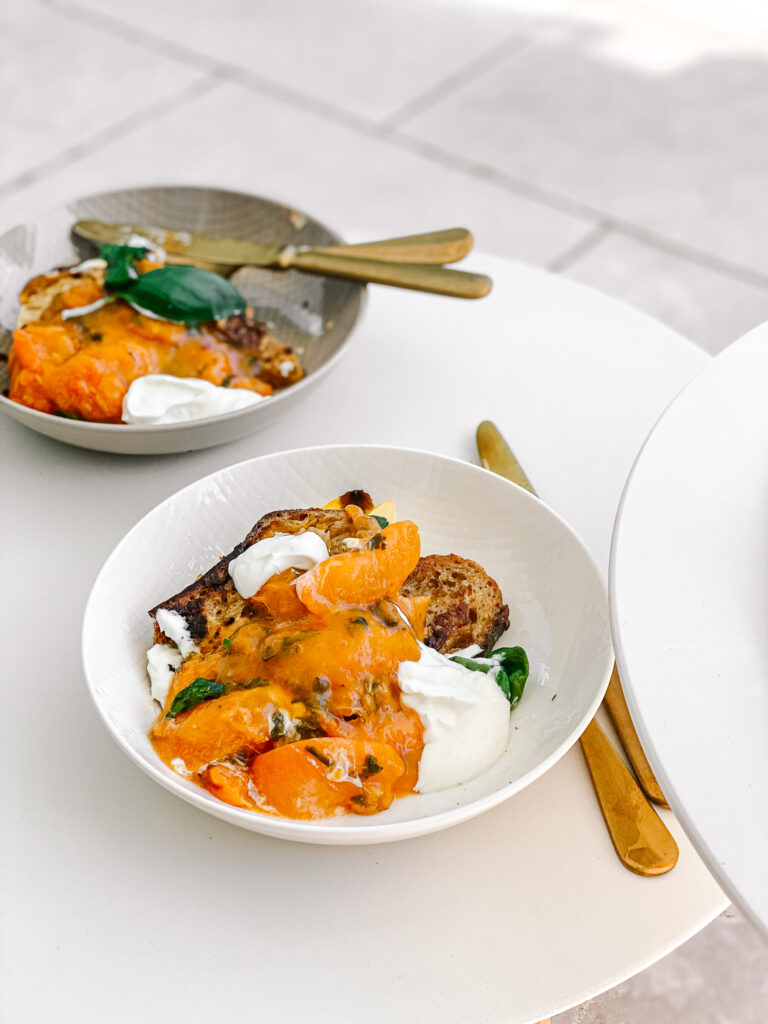
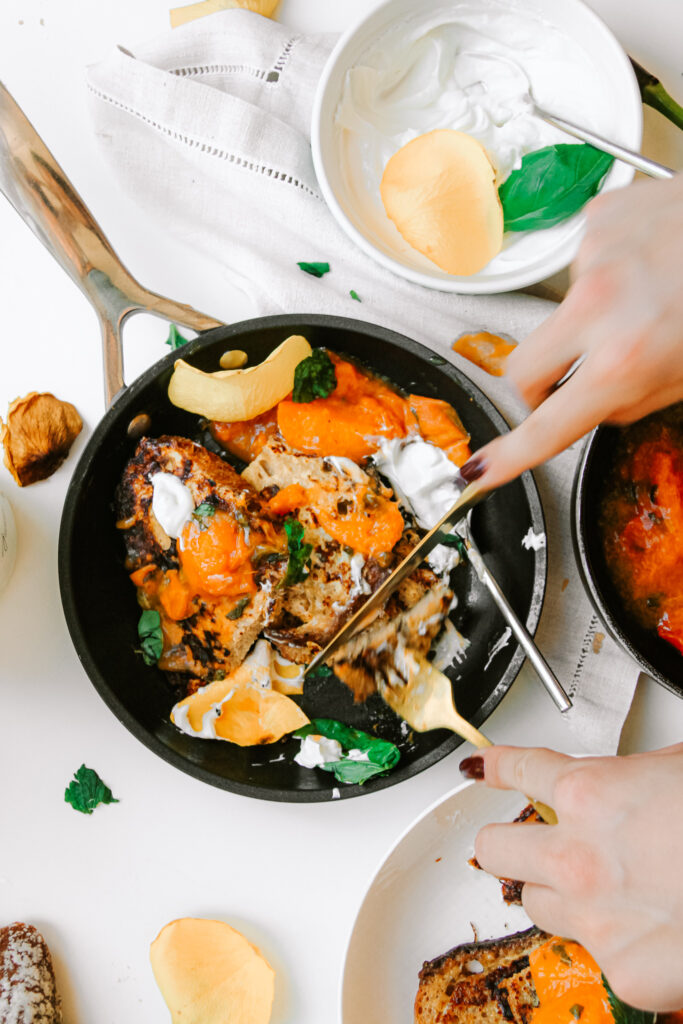
No waste French Toast with Basil Apricots

Juli 28, 2020 by katharina.kuehr Kommentar verfassen

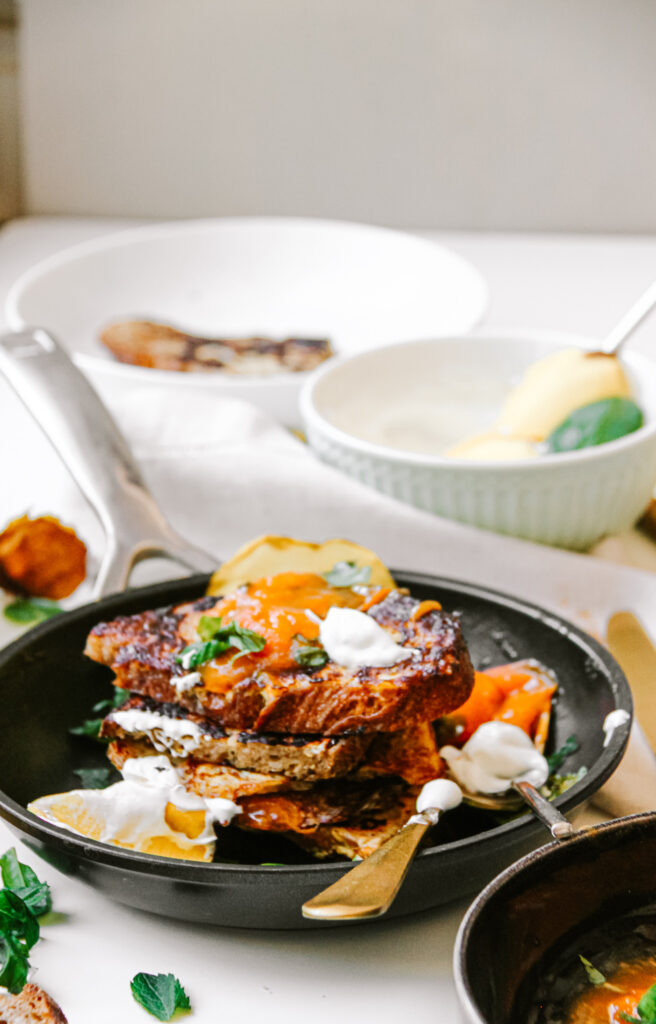
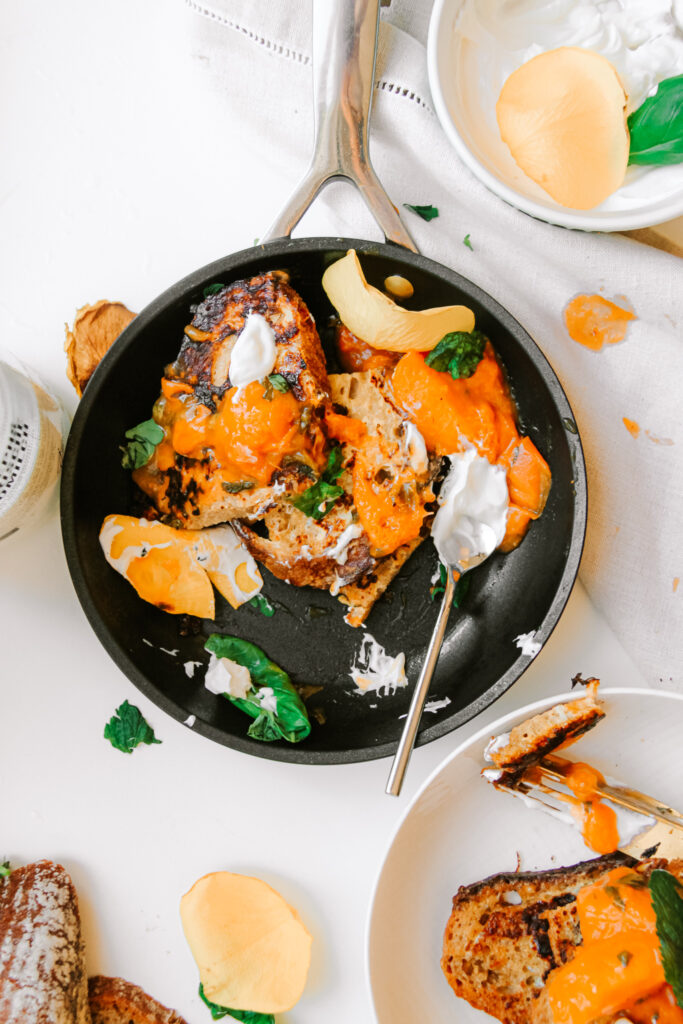
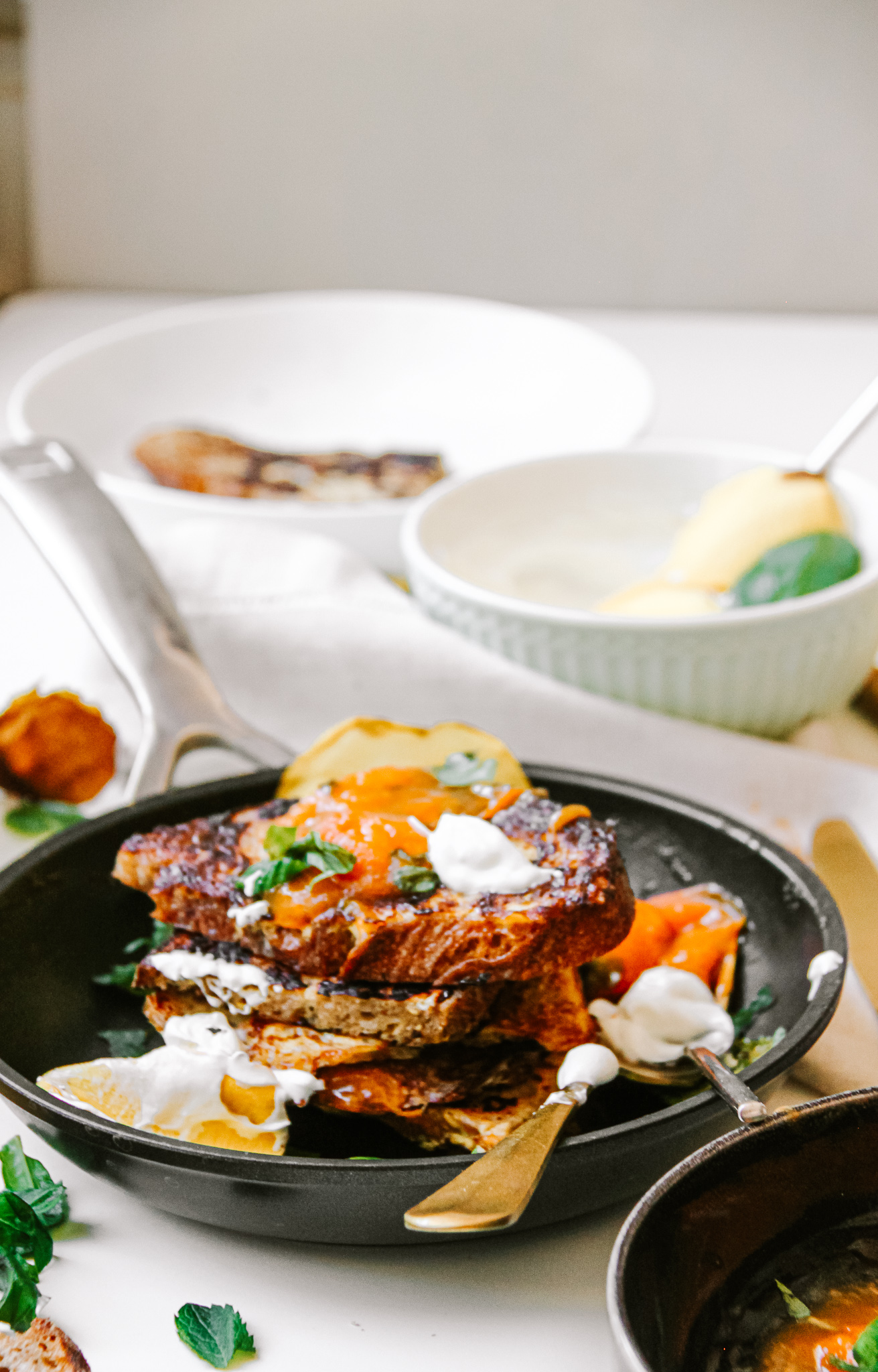
This recipe post is a very special one to me. I do not just want to introduce a super delicious and healthy recipe to you but I also want to address a topic with this: sustainability and food waste in the kitchen. I believe that there is way to much food thrown away and that way to often we do not care about making conscious and sustainable decisions in the kitchen. With this recipe I designed one that is low to zero waste, that is fully organic and local and that is made of regional ingredients from Austria. Kind of a back to the roots recipe to raise awareness of how wasteful we can be in the kitchen.

But first, what even is French toast?

I think most of us know, but not everyone. French Toast is bread that has been soaked in milk, eggs, and sugar (traditionally) and then is fried in a pan, served with syrup. In Austria it also is very popular with the name „Armer Ritter“. It is something actually pretty traditional in the Austrian cuisine but has only become really popular with the American name „French Toast“.

How to reduce (food) waste with French toast

The great thing about this dish is that it is something we Austrians would call „Restlessen“. This literally translates to eating the remains, so what’s left. It is an amazing (and pretty tasty) way to use leftovers.

  • Instead of throwing bread away that is one week old and already pretty stale, you can use it for this recipe. That way you save food from being thrown away AND you make a super tasty meal. A win win. But it still is by far not popular enough, unfortunately, that’s why I want to encourage you to give it a shot. Next time you consider throwing bread away, try this out.
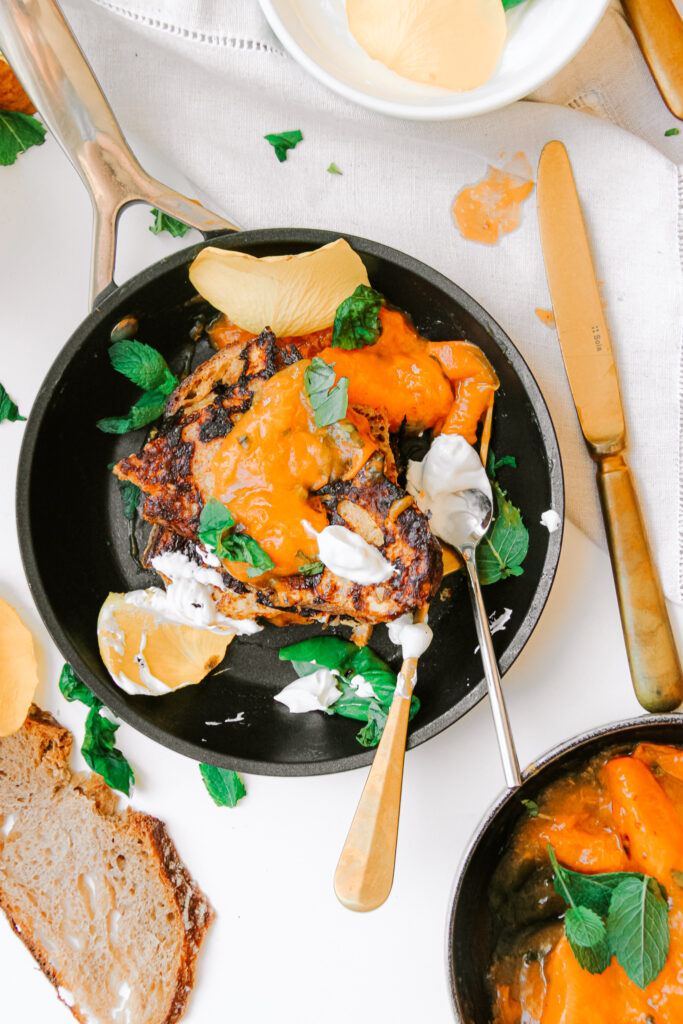
  • Similar goes for the apricots. I sometimes feel that apricots are like avocados. They are not ripe for a week and then suddenly one day they are and the next they go bad. And if you do not want to make something with the apricots this one exact day when they are good, you are likely to throw them away. Which is sad. When you cook them down, add some lemon juice, a little sweetener and some fresh basil you basically make something like jam (Marmalade). And this will last for several days in the fridge. Again, you do not have to throw anything away and you create something super tasty. What I love most about this is that you can add this „jam“ to basically anything from yogurt bowls, porridge, cake to ice cream or another dessert cream. And no, you cannot only make this with apricots. With pretty much any fruit it works. Peaches, berries, cherries, whatever you have on hand and you feel like you can use up.

What about the rest?

Well, that’s the two main components that are contributing to reduce waste. But what about the rest? We still need milk, eggs, sweetener, oil and yogurt. So one by one.

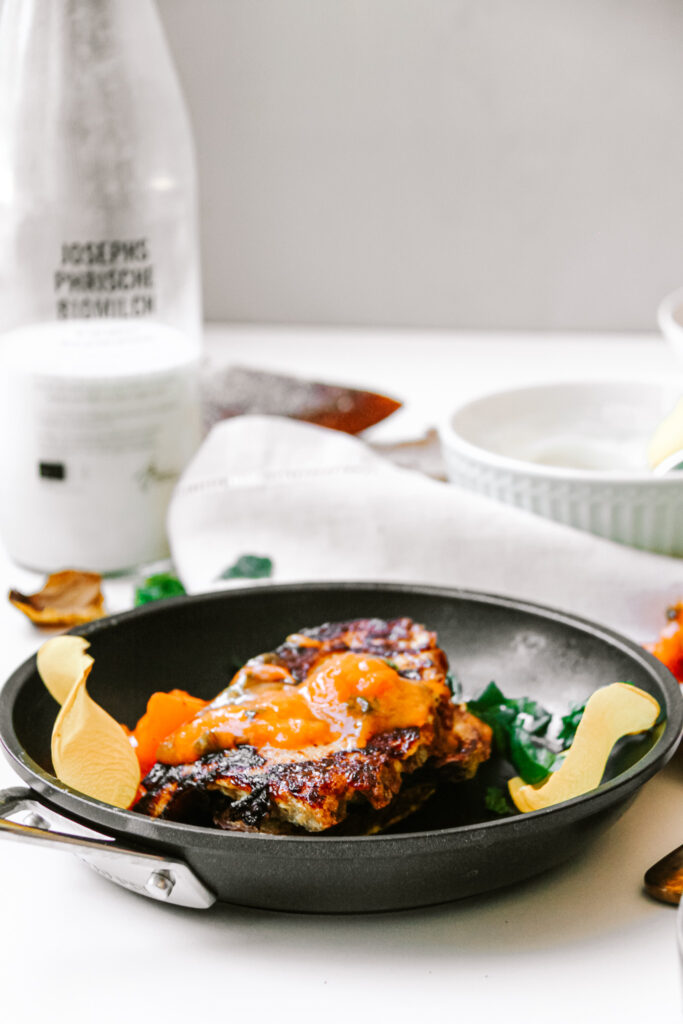
  • Milk: As for the milk, I love to buy it as Joseph Brot . This comes from Austrian farmers, is all organic and packaged in glass bottles. Glass bottles are amazing because they are reusable. And also if you cannot return them you can use them at home for example when you make fresh smoothies or juices. Reuse and reduce waste.
  • Bread: Joseph Brot to be honest is where I go for most of my organic ingredients for recipes like those. Not only do they have the best and organic sourdough bread in whole Vienna, which is made of grains from Austria but it also comes in paper bags. No plastic.
  • Yoghurt: Moreover they have organic Austrian yoghurt. Another ingredient for this recipe. And again, it comes in glass jars. Whenever such a jar is empty I love to use it for storage. No matter if it is for nuts, dried fruits or a homemade sauce or dip that needs to be stored in the fridge. I just wash them when empty and reuse them. So incredibly handy to have on hand. I am not in any way sponsored by them and I do not want to tell you that you need to go there to buy your ingredients. Most supermarkets (I know Billa and Spar do so) have milk and yoghurt in glass jars. But what I love most about going to Joseph is that I know that the products don’t travel for days because they are all from Austria. This also is better for the environment of course and their CO2 footprint.
  • The sweetener: I love using honey as a sweetener because of several reasons: first, it’s super tasty, second, it is healthier than sugar since it does have some nutrients, third: you get it at every corner in Austria. Plus, most of the times you get it in glass jars. No plastic, less waste, reusable. I have already told you why glass jars are pretty cool but think about this: you empty your honey jar, you wash it and you can store your homemade apricot jam in it. Isn’t that amazing? It is!
  • Eggs: here it is really hard to go no waste. But there are great ways to can get close! When you purchase eggs do not buy them pre-packaged. Either buy them on a farmers market or some supermarkets have places where you can fill them into the boxes yourself. This is really convenient because you an reuse the cartoon boxes several times and you d not automatically take a new one every time you purchase eggs. Another thing that I have seen recently is a reusable egg container. So it is like a cartoon box but made out of plastic (unfortunately) but you can basically use it forever and always refill it. if you want to go 100% zero waste you could also, after using the eggs, compost the shell or if you have a farmer close to you give it to them because they may feed it to their chicken.
  • Oil: last but not least we have the oil. I prefer using something like sunflower seed oil because it is quite neutral in taste but it is regional and often comes in glasswork bottles. But also coconut oil works well (just that it is not regional here) because it has a very high cooking temperature. Also, it most of the time comes in glas containers. Again, you can reuse them. In the kitchen, for storage or even for decoration. If you add some flower leaves and a candle, this makes a beautiful decoration and accounts for an amazing atmosphere.

Why buying local?

Buying local can never harm. There are 2 main reasons I buy local. the first one is the impact it has on the environment. The transportation already makes a huge difference if the apricots come from Styria, which is 200km away or from Portugal, which is 2000km away. They do not need to be shipped by plane, they do not need a cooling system that lasts for days and is energy consuming. They come from Styria, maybe on the same day you purchase and use them.

Secondly, right now, more than ever it is important to support your local economy and local farmers. This crisis has hit every single one of us and some more than others. Of course apricots from Portugal may be cheaper because agricultural standard are not as high as they are here and therefore Austrian farmers have a harder time competing with farmers from abroad. But in order to keep the Austrian system alive and to fight through this crisis together we have to stay strong and support each other.

The last point: why buying organic

I think we have all heard that buying organic (Bio) food is better than purchasing non organic food! But why actually? Several reasons. When jr comes to fruit and veggies I would ALWAYS long for organic food when available. When being produced organic no pesticides or chemicals are allowed to be used. The use of those does not only harm our environment and soil in the long term but it actually is not good for our overall health. All of the things that have been added or injected into the food to help it trow faster and bigger can in the long term really mess up your gut and the bacteria in it and digestion. Those are things our bodies don’t know and therefore do not know how to really handle it. So really, try to buy organic. It is more expensive but your health should be worth the investment.

The other reason is, when it comes to animal products, the living conditions of the animals are better than for non-organic. Unfortunately they are not always much better or good, but organically produced animal products have higher standards.

Why doing and considering all of this? 

See, if we keep our food consumption and buying behavior as is, these are not very good conditions for the agriculture in the future. We need to make a change and we should start now. Producing less or no waste is essential as well as supporting local economy (especially after or while facing such a crisis). Furthermore it is better for our bodies and the environment when we make a change to organic shopping.

I know all of this information may be a little bit overwhelming at once. Still, I wanted to pack it all in one blog post to have the overview and because it is so important to me. I just wanted to give you a brief introduction into all of these aspects but I can also do a more detailed blog post on these topics if you are interested. But for now, I hope that you will love and enjoy this recipe and keep all of this information in the back of your head.

Print

No waste Apricot Basil French Toast

Course Breakfast, brunch, Dessert
Prep Time 10 Minuten
Cook Time 10 Minuten
Total Time 20 Minuten
Servings 2 servings

What you will need

  • 1 egg
  • 150 ml milk
  • 2 tbsp honey
  • a pinch of sea salt
  • 2 large slices of bread can be a few days old and stale
  • 5-6 apricots
  • 1 handful basil
  • 1 tbsp butter or oil
  • 150 g greek yoghurt
  • 1 tbsp honey

How to

  1. Combine the eggs, milk, honey and sea salt in a bowl. Add the slices of bread and dip them into the mixture. Let them soak in the liquid for about 2 minutes on each side.

  2. In a pan heat up half of the butter. Slice the apricots and finely slice the basil. Add the apricots into the hot pan and sautée them for 2 minutes on high heat. Turn the heat down to medium and add the basil and honey and let simmer for about 5 minutes until it is a bit saucy.

  3. Add the remaining butter to another pan and heat it up. Add the soaked bread and fry on each side for about 3 minutes on medium high. Take the bread out and place it on two plates. Add the remaining egg and milk mixture to the pan and make "sweet scrambled eggs".

  4. In a seperate bowl combine the greek yoghurt with the honey and whisk until creamy and smooth. Top the french toast with the basil apricots and the whipped honey greek yoghurt. Serve with some more honey or maple syrup and enjoy!

Happy cooking,
Enjoy,
Katie // Une Petite Cuisiniere

Kategorie: Breakfast, Desserts, Diet-Specific, Vegetarian, Vegetarian Stichworte: apricots, armer Ritter, breakfast, brunch, French toast, healthy, healthy brunch, healthy brunch recipes, healthy eats, low waste, Marillen, marillenzeit, no waste, no waste cooking, summer brunch recipes, toast Tuesday

« Vorherige Seite
Nächste Seite »

Footer

What has been happening on my Instagram

Copyright © 2024 Une Petite Cuisinière on the Foodie Pro Theme